Description
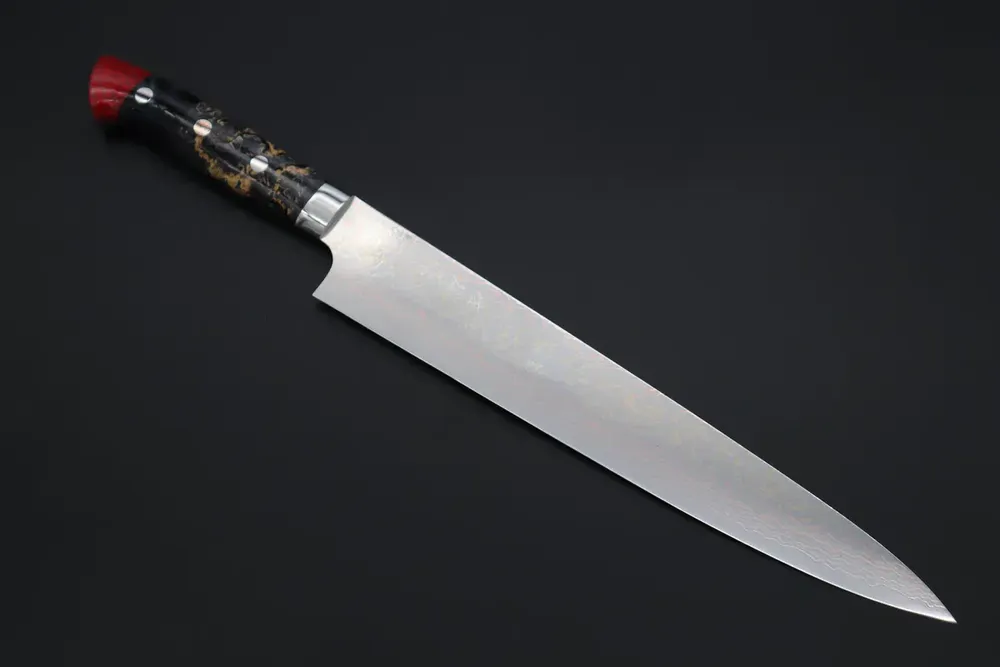
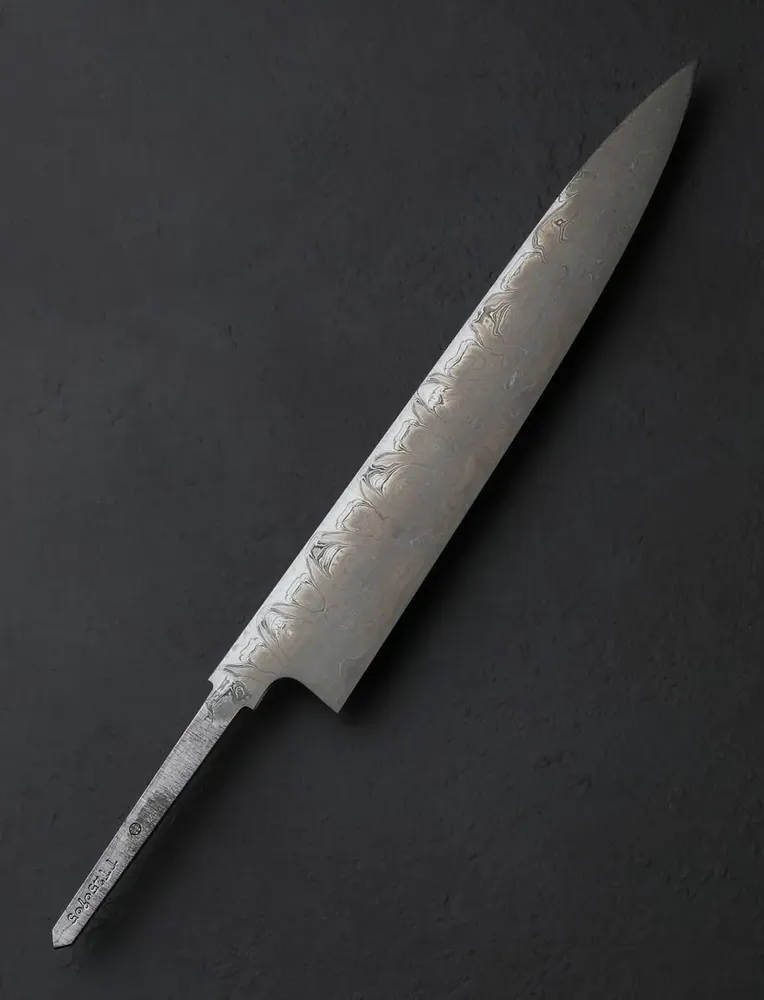
The name “Chihaya” is a reference to the opening three sounds of a famous Japanese waka, or short poem, which features maple leaves as its subject. In early autumn, a crimson glow graces the Tatsuta River—a reflection of the leaves above—the author comparing the shimmering beauty to the “age of the gods.” When damascus artist and bladesmith Shoichi Hashimoto created the pattern seen in this blade, he was immediately reminded of maple leaves beginning to turn color, and the Chihaya pattern was born. One of the most complex and resource-intensive damascus styles Mr. Hashimoto has pursued, the exact structure of the blade and its distinct damascus elements is a secret that Shoichi is not yet prepared to reveal. This 270mm / 10.6” sujihiki profile, forged by hand at his Hiroshima studio from Chihaya damascus, is the largest, rarest, and arguably the most unique creation we have had the honor of receiving from him. At its core, forming the thin, finely honed, razor-sharp cutting edge, is a four-alloy damascus made of Shirogami (White) No.1, Shirogami (White) No.2, Aogami (Blue) No.1, and Aogami (Blue) No.2 carbon steels. With the intention of mimicking the quench lines found in traditional Japanese sword blades using damascus steels only, the outer cladding is then layered atop the core using an approach that Shoichi holds as a guarded secret of his remarkable ingenuity. This cladding material—the visually lighter steel near the blade spine—is crafted from seven medium-to-low carbon alloys. The result is a striking mosaic of steels that can be attributed only to the creative and technical vision of Mr. Hashimoto. With the exceptional cutting performance required of such a blade, Shoichi entrusted his partner and specialist, Mr. Takahashi, to complete the sculpting of the convex symmetrical bevels and the final cutting edge. The completed work of functional art is nothing short of extraordinary: a modern rendition of humankind’s oldest tool, crafted using traditional sensibilities and modern techniques. Marked by Shoichi, the blade’s tang details the knife’s origins, including the pattern name, damascus billet number, the date of first polishing, and the quench date. This blade-only offering does not include a handle, leaving the selection process—including shape, length, and materials—to the preferences of the blade’s new owner.