Description
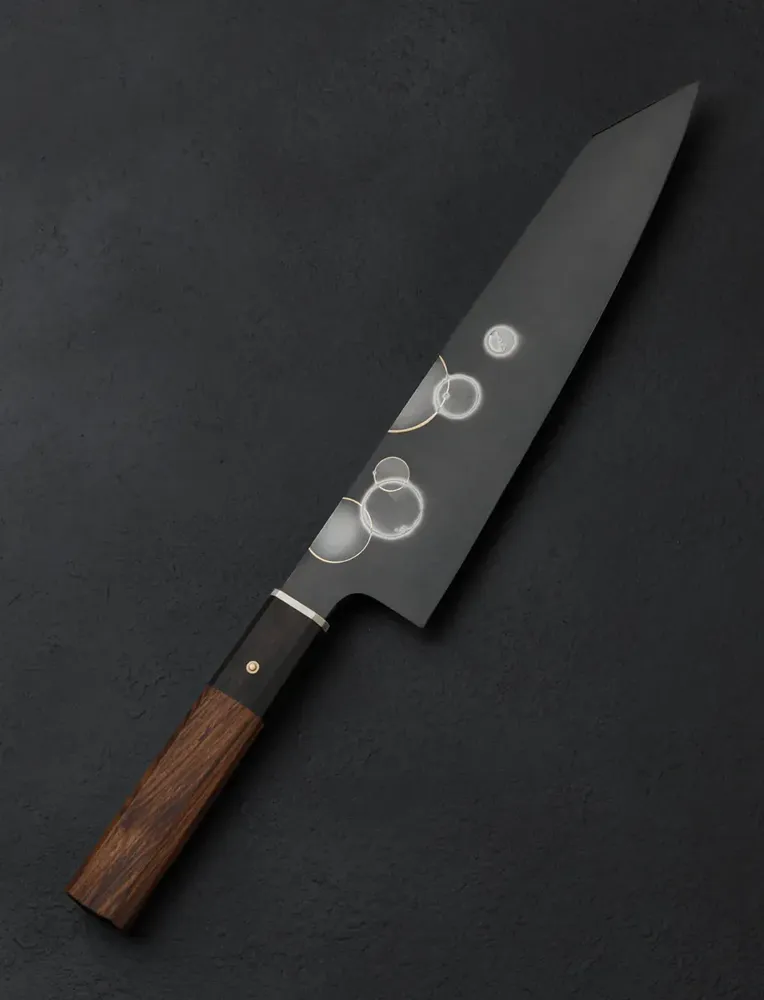
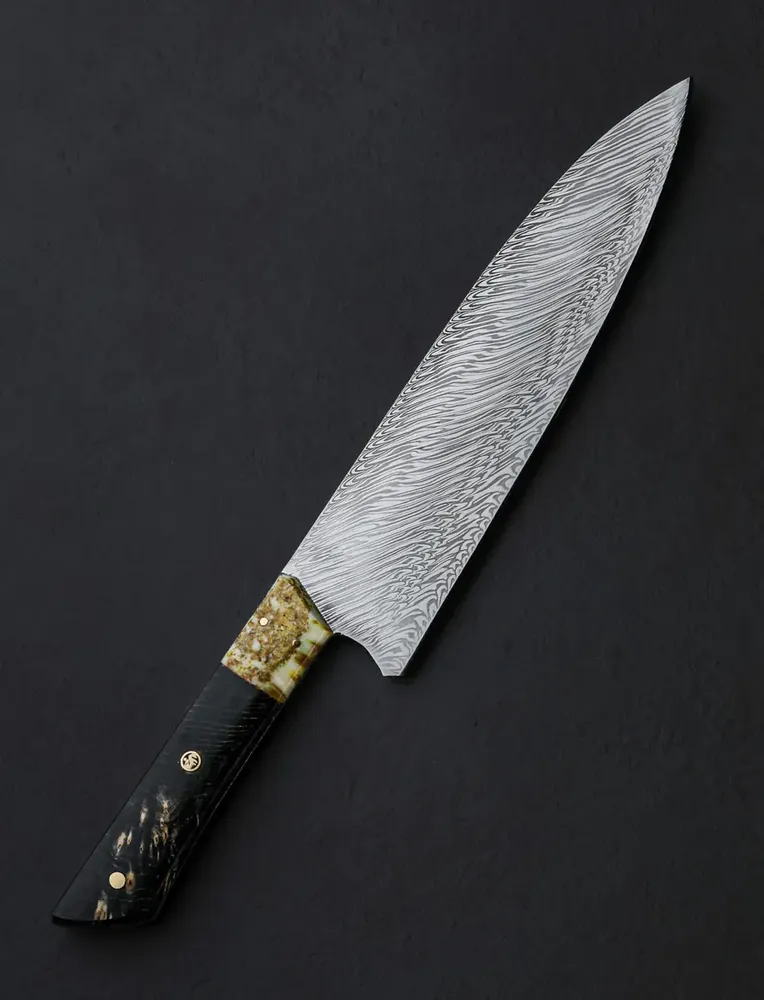
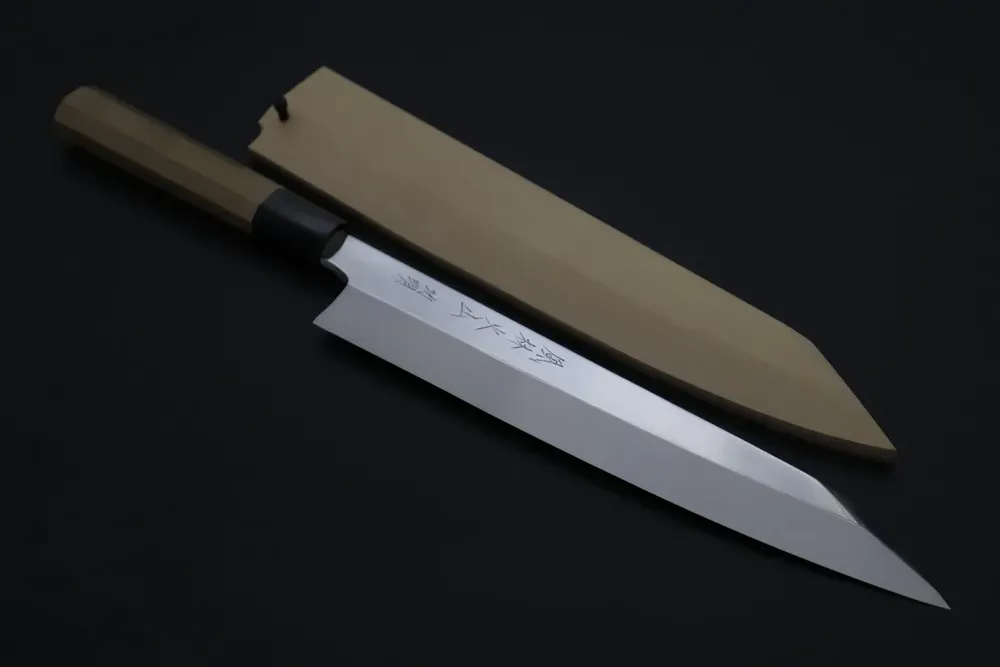
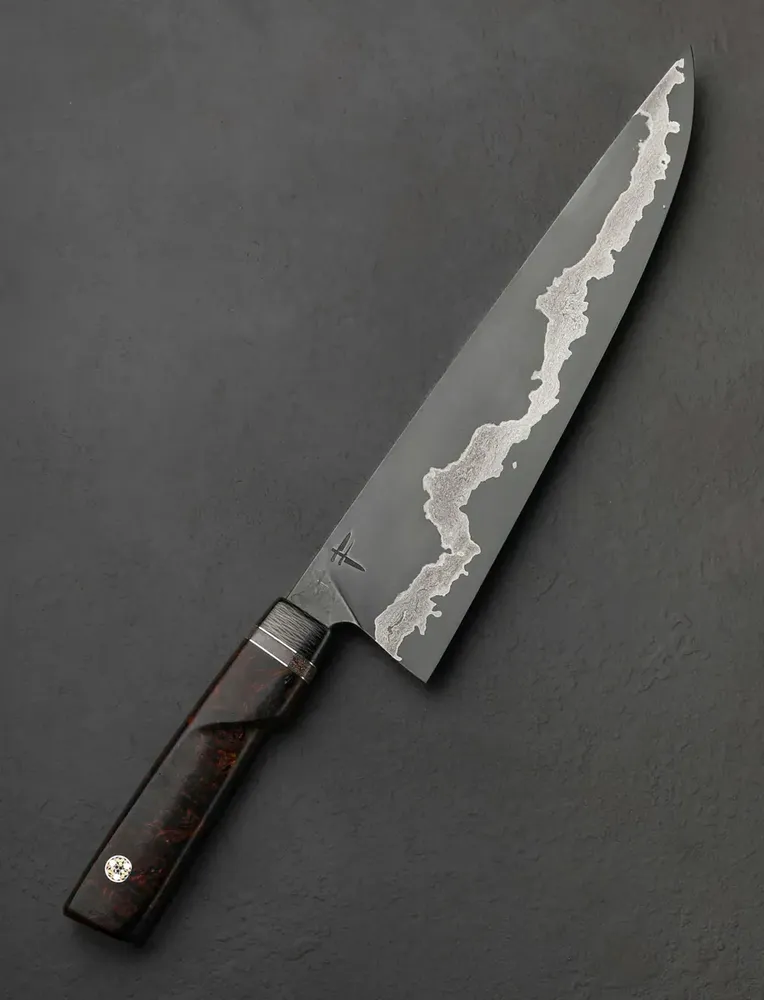
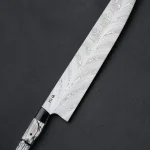
Hand-forged and partially quenched at his studio in Hiroshima, this gyuto marks the first hon-yaki blade by Shoichi Hashimoto to arrive at our office. A traditional and demanding approach to single-alloy blade making, hon-yaki is a technique Shoichi does not expect to revisit often, making this piece a rare moment in his body of work.
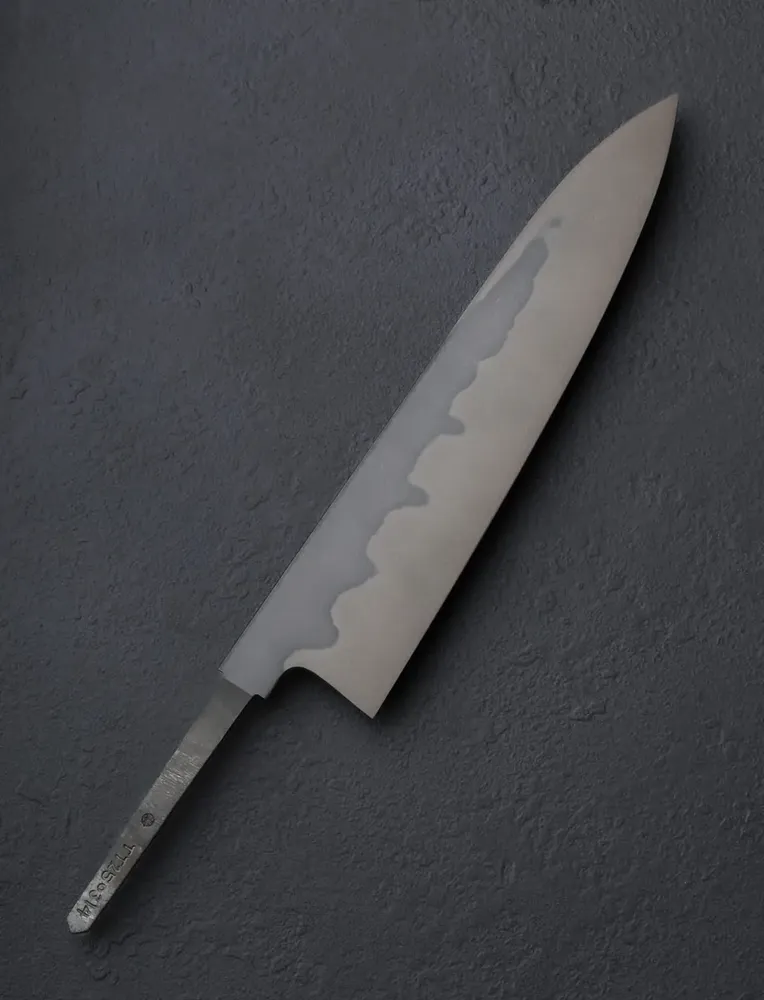
Forged from Shirogami “White” No.1 high-carbon steel—a high-purity alloy prized for its exceptional hardness, keen edge potential, and ease of sharpening—the blade reveals a beautifully defined hamon, or quench line, through Shoichi’s careful etching and final polishing. The name Omadaka (沢瀉) reflects both method and meaning. This particular blade, serial number 241115_20, was oil-quenched—an approach in which the heated blade settles calmly into the liquid during cooling.
Omadaka refers to the three-leaf arrowhead plant, a symbol in Japanese culture associated with victory, prosperity, and ambition. Closely related to the kuwai vegetable, which grows in water-filled paddies much like rice, the plant evokes the quiet, blooming stillness of rice fields. It is this calm image that comes to Shoichi’s mind during oil quenching, and from which the blade takes its name.
At 240mm long and 53mm tall at the heel, the gyuto presents all the qualities expected of an all-purpose chef’s tool from this accomplished bladesmith. Tall, symmetrical convex bevels slim gracefully to an especially fine edge, with only a glass-thin secondary bevel present. A full distal taper along the faceted spine carries the blade from just over 3mm at the choil to 1.3mm an inch from the tip, narrowing further still to a needle-like point.
With the exceptional cutting performance required of such a blade, Shoichi entrusted his partner and specialist, Mr. Takahashi, to complete the final polishing and shaping of the cutting edge. The completed work of functional art is nothing short of extraordinary: a modern rendition of humankind’s oldest tool, crafted using traditional sensibilities and modern techniques. Marked by Shoichi, the blade’s tang details the knife’s origins, including the billet number, the date of first polishing, and the quench date. This blade-only offering does not include a handle, leaving the selection process—including shape, length, and materials—to the preferences of the blade’s new owner.