Description
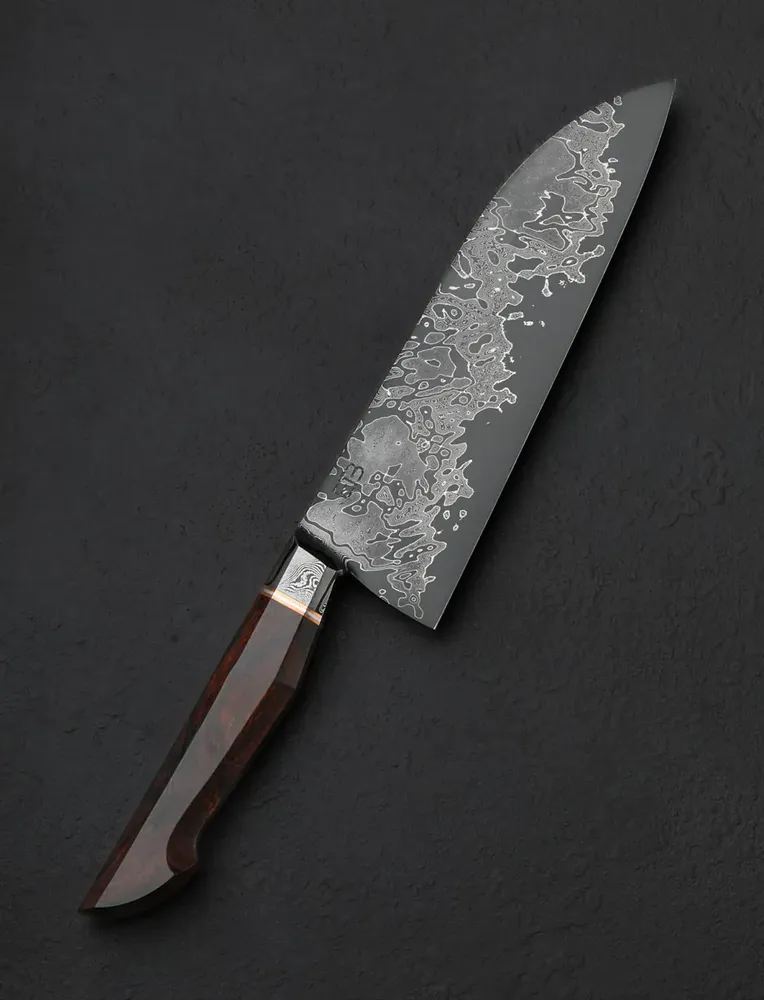
As with patterns by Shoichi Hashimoto previously presented in our collection, including Tobikumo, the name of this gyuto’s damascus, Zaregumo (戯雲), originates in the clouds. While gumo differs from kumo in pronunciation, both share the same character (雲) and meaning: cloud. Extraordinary and rare, this creation—a prototype from the spring of 2024, developed as part of Shoichi’s exploration into combining reverse-twist damascus bars into a single blade—reminds him of the playful wrestling of two animals. It was this image that gave rise to the name Zaregumo: zare (戯), meaning to play or frolic, and gumo, for cloud. To spend time with this object lifts the spirit, carrying its operator somewhere lighter and more buoyant.
Each of identical structure yet wound in opposing directions, the two twisted damascus rods Shoichi combined feature six distinct high-carbon alloys: Hitachi Shirogami “White” No.1 and No.2, Aogami “Blue” No.1 and No.2, and small amounts of two additional non-Hitachi cutlery steels. In total, the Zaregumo Gyuto contains 2,760 layers.
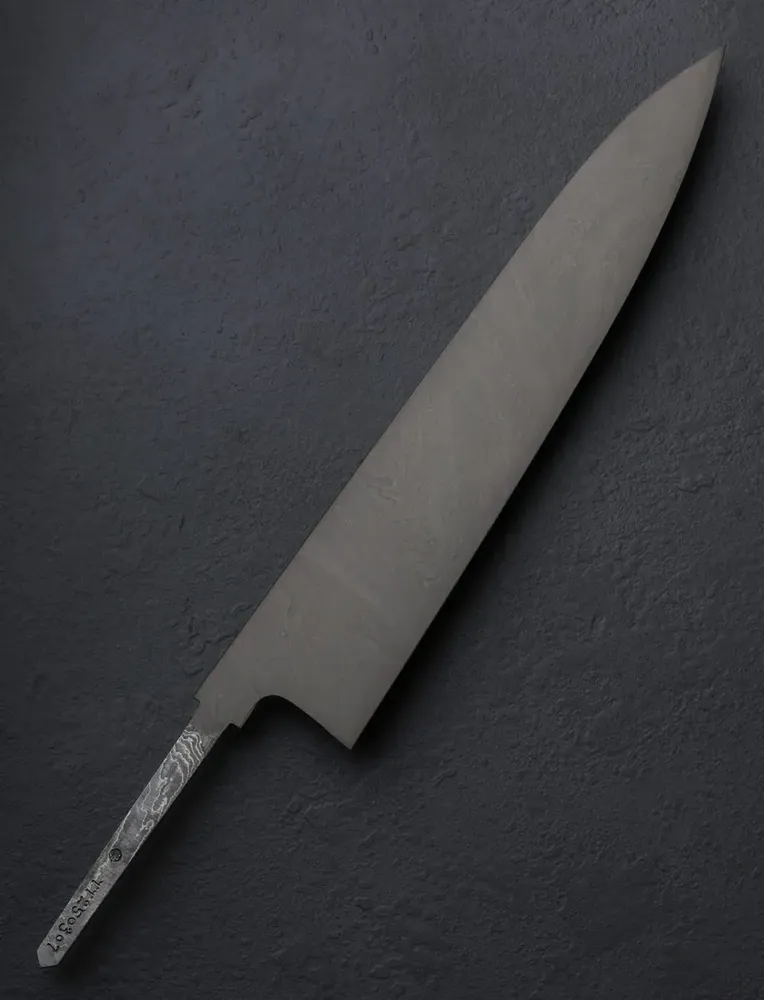
The largest and most formidable gyuto by Mr. Hashimoto to arrive at our NYC office, 278mm / 10.95” of thin, hard, hair-popping sharp edge sits beneath masterfully honed bevel geometry, ready to perform every cut in the chef’s kitchen with precision and grace. Symmetrical convexity through the primary bevels balances toughness with finesse, allowing the edge itself to remain extremely thin while ample material above supports demanding cuts through dense ingredients. This convexity also contributes meaningfully to food release and all-around cutting performance in daily use. The spine—gently faceted along both edges, as is Shoichi’s hallmark—remains rigid and strong while slimming progressively from just over 3mm above the 56mm-tall heel, to 2.4mm at the midpoint, 1.4mm an inch from the tip, and finer still toward the blade’s delicate end point.
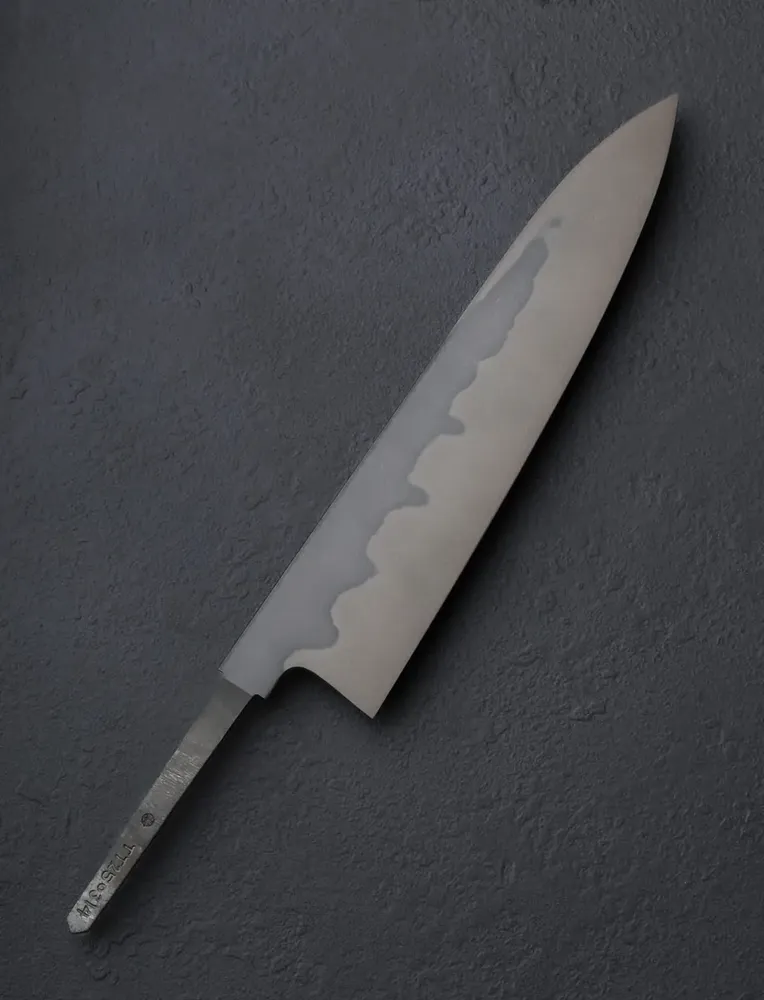
Small and innovative, the original damascus bar destined for this blade was pushed to its limits. To ensure sufficient material at the tang for future handle installation, Shoichi took the uncommon step of laminating an additional damascus pattern to each side of the unfinished tang. Clearly visible in the accompanying photographs, this detail adds another chapter to the blade’s story: made from fourteen types of hard and soft steel and a small amount of pure nickel, the tang’s cladding alone contains 1,330 layers. In finished form and ready for handle mounting, the tang is engraved with the damascus billet number, quench date, serial number, and—on the reverse—the date of first polishing. Final polishing and sharpening were entrusted to Shoichi’s colleague, edge specialist Mr. Takahashi.
Available as a blade-only offering, this one-of-a-kind gyuto allows its new owner to select a handle that suits their exact preferences in material, style, and proportion. Extraordinary in every way, Zaregumo exists between worlds—its origins in the clouds, its purpose anchored in the oldest human craft: the art of cooking.